Traditional Search vs. AI Search: How Evolving Platforms Differ
A comparison of indexing mechanisms, retrieval algorithms, and user interaction patterns between legacy search engines and modern AI search agents.

For nearly three decades, the basic loop of search has remained unchanged: users enter a keyword, the search engine matches it against an inverted index, and displays a ranked list of links.
Today, this paradigm is fragmenting. AI-driven engines retrieve and synthesize answers in real-time, changing how search engines index, score, and present information.
1. Indexing: Keywords vs. Semantic Embeddings
Traditional search engines index pages by extracting terms, analyzing frequency (TF-IDF), and recording structural metadata. They rely heavily on exact matches and synonyms.
AI search systems represent data using vector embeddings.
- Vector Space: Words, sentences, and whole documents are converted into numbers (vectors) in a high-dimensional space.
- Semantic Proximity: The search engine measures how close the search query’s meaning is to the page’s meaning, even if they share zero keyword matches.
- Context Preservation: AI engines understand context (e.g., the difference between “Apple the company” and “Apple the fruit”) by examining surrounding words.
2. Retrieval: PageRank vs. RAG Synthesis
In traditional search, rankings are heavily determined by PageRank and authority metrics (domain authority, incoming backlinks, anchor text distribution).
AI search engines utilize Retrieval-Augmented Generation (RAG):
- Search: The system executes a search query across a traditional index to retrieve top documents.
- Read & Extract: An LLM reads the content of those pages in real-time.
- Synthesize & Cite: The model generates a conversational response, pulling details from multiple pages and inline-citing them.
3. Structural Comparison
| Feature | Traditional Search (e.g., Standard Google) | AI/Generative Search (e.g., Perplexity, Gemini) |
|---|---|---|
| Output Type | Ranked list of destination URLs | Single synthesized text with citations |
| Matching Style | Lexical (keyword exact & synonyms) | Semantic (intent and vector mapping) |
| Core Value | Referral traffic to publisher sites | Direct answer delivery with attribution |
| Context Length | Short, term-based search bars | Long-form conversational dialogue loops |
What This Means for Publishers
As AI search gains traction, publishers will see shifts in referral traffic:
- Zero-Click Searches Will Rise: Informational queries will be answered directly on the search platform.
- Intent Matters More: Informational content will serve as citation context. High-intent transaction pages will remain direct click destinations.
- Structure is King: Clear headers, clean HTML, and structured data schemas are essential for ensuring that RAG scrapers retrieve and represent your brand accurately.
AI Verification Agent
Conversational QA and fact verification engine synced with this article.
// Related Articles

How AI Visibility Tools Actually Collect Data: API vs UI Scraping
How AI visibility tools collect data: API-based collection vs real browser-based UI execution. A technical breakdown of their trade-offs.

I Crawled 65,000 Pages of My Own Site Without Parsing a Single Sitemap
Somewhere between talks on day one, I think it was during a hallway chat that I decided to run an aggressive crawl experiment using direct link scraping and BFS.
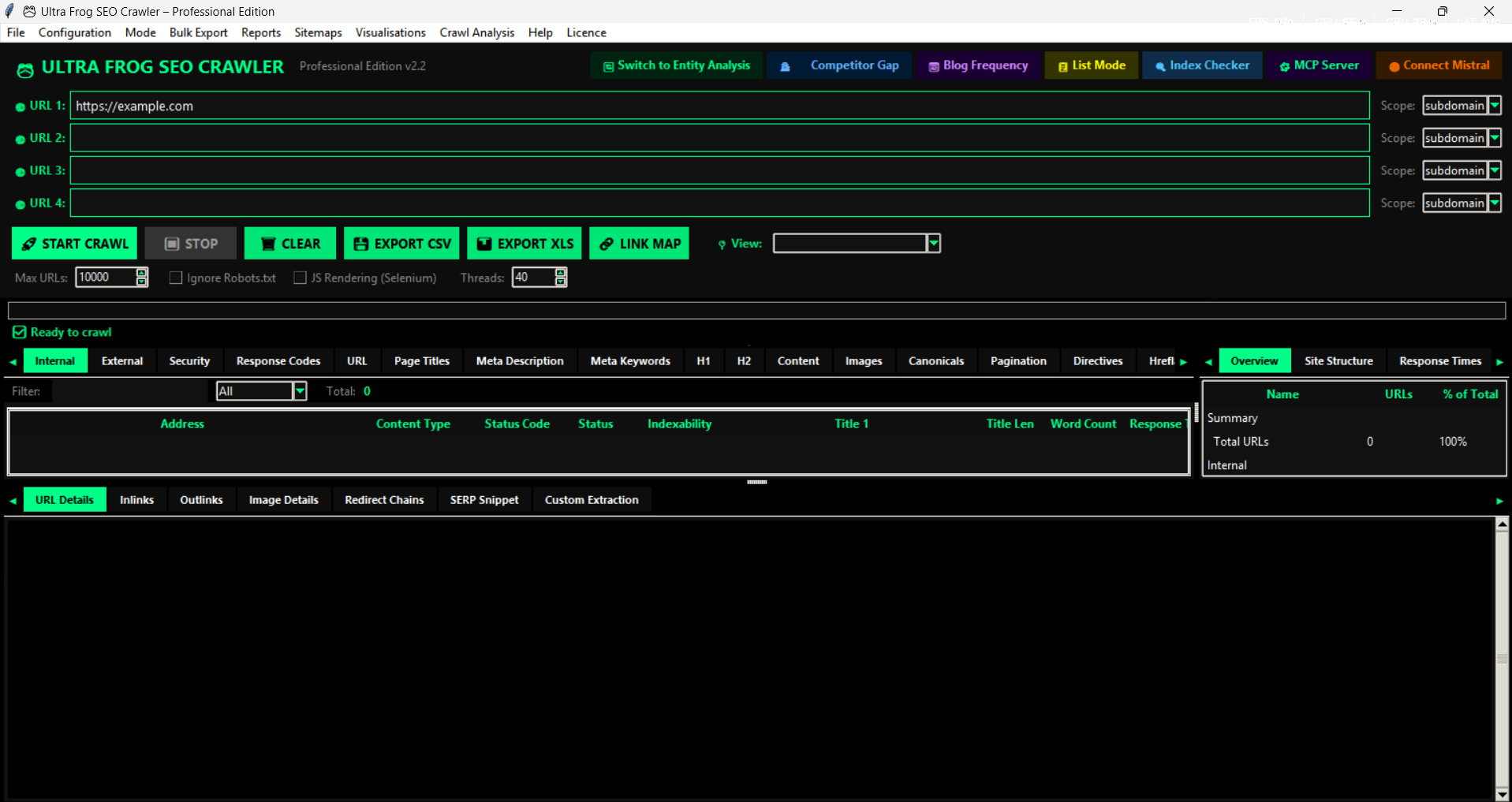
Building Ultra Frog: My Journey Creating an AI-Powered Screaming Frog Alternative
Why I built Ultra Frog SEO Crawler—a high-performance, open-source alternative to Screaming Frog infused with MCP servers, Mistral AI, and real-time sitemap validation.